
Techno-skepticism
(ー_ーゞ

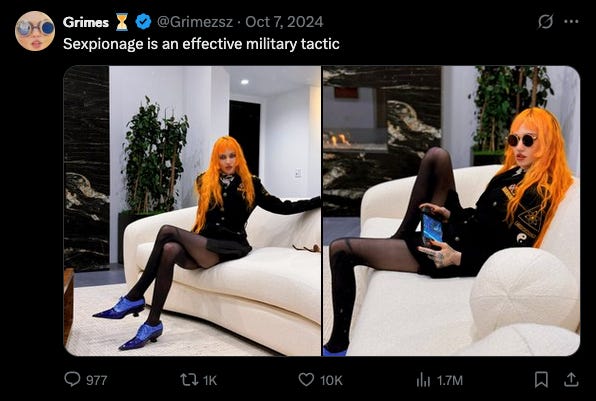
Are you a techno-optimist or a techno-pessimist? Why are so many artists anti-AI? Is it fear or judgment? Before we get too into it I want to be brutally honest, I am writing this because of freaking Grimes! I want to turn on her so bad but I can’t, I am a die-hard Grimes fan. I am sure most of you are aware that Grimes is definitely a techno-optimist, I’ve always found this very inspiring. I remember when news about her dating Elon started to populate my socials, it was hard to believe at first but then I though to myself, if one of the richest men on earth slid into my DMs, would I ignore him? I am still not sure I know the answer to that question. I still collect passive income from my OF—in case you didn’t know I am an e-SWer—the idea of capital and its power intrigues me. I finally got around watching her recent TIME interview and it got me thinking about AI, again.
I took me for ever but I finally hopped in the AI trend in the later half of 2024. Shout-out to UKAI Projects for opening me up to using AI as an artistic tool. Before participating on UKAI’s AI Residency last year, I didn’t really care to use AI that much. I kept hearing bad things about it on my socials. Nearly every artist I follow kept complaining about it (Grimes being one of the few that actually embraced AI) and how it was ruining the artistic ecosystem and sustainability, let alone it’s ecological impact. But then I figured—every time I search something up on Google, I am using AI. Every time I use my laptop or my phone, I am using AI. Every time I fly or take a train or a bus or a car, I am using AI. AI has been here for a while and if that is the case, why did we seemingly started hating on it last year? Was it when AI was able to generate images and videos that our feeling towards it changed?
Some of the outcomes from the AI residency I participated on include my now daily use of ChatGPT and an 8-song album named Phantom, created in collaboration with Juani. We have pitched the project to various labels, and seemingly no one is interested in publishing the project. I am starting to believe its because we only used AI generated samples. It’s almost as if by acknowledging that we used AI generated samples to create the project, people immediately jump to the conclusion that we just prompted something into a text box and then a few seconds later we were given the entire duration of the project.
I enjoy imposing limitations when working on artistic projects because I often get overwhelmed when I have to many options to begin with. It’s like staring at a blank canvas or page, I almost never know what to do or where to start.
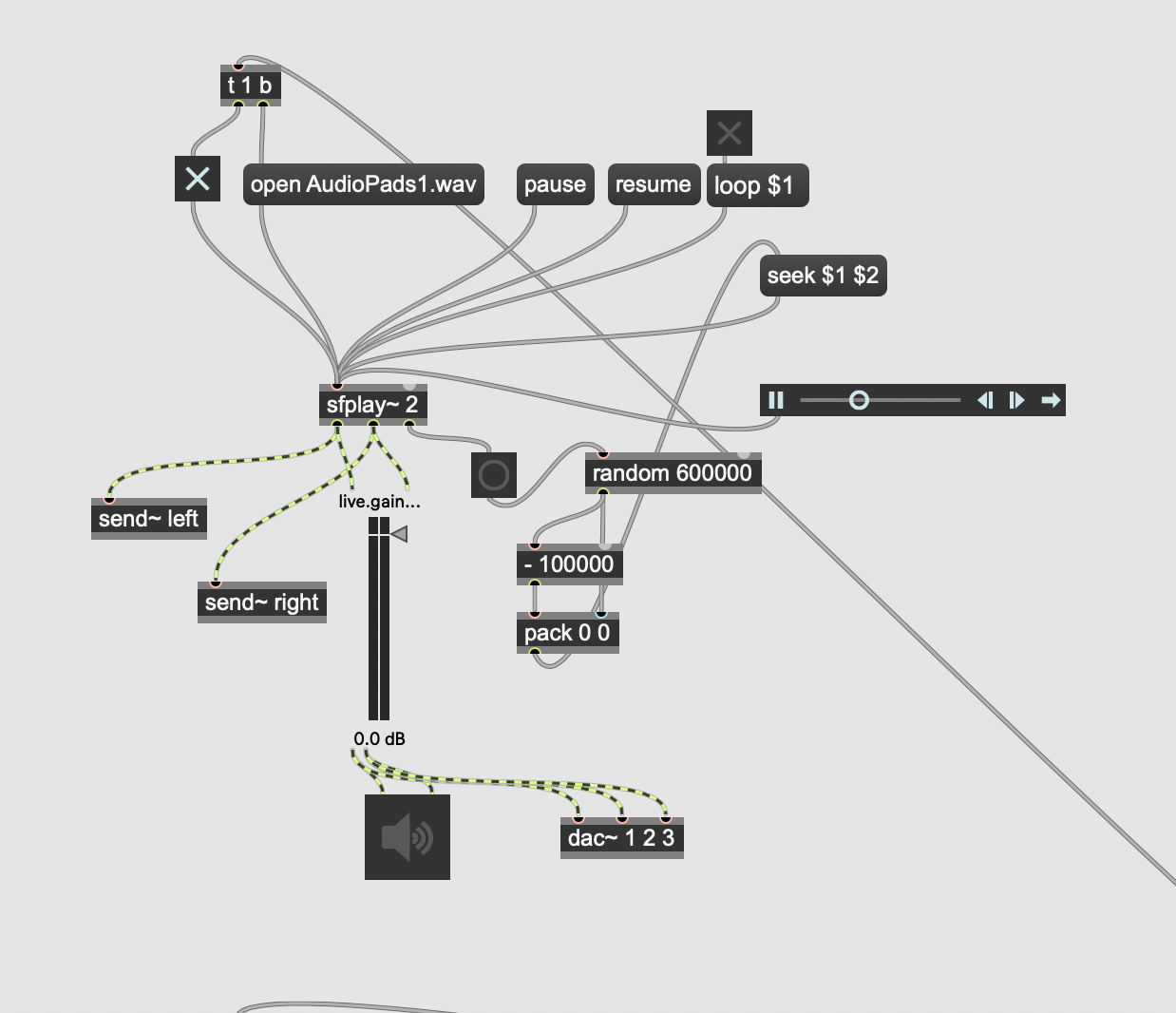
AI didn’t compose the entire project, as a matter of fact Juani did most of that on Ableton. My role in the collaboration was to program a patch on Max/MSP that we fed stems into so that my laptop would generate an endless and seamless composition that was meant to be displayed as a sonic installation. We showcased the piece a couple of times and even then, people genuinely thought AI was the one generating the composition. Very few people cared to ask what the creative process was, especially after reading the project description, which mentioned AI.
As a matter of fact, based on the research we carried out during our residency, one could argue that AI is pretty dumb. You still need to program it, train it and correct it when necessary. Perhaps one day, hopefully in my lifetime, the sentient hyper intelligent all-problem solving AI that is being marketed everywhere will actually exist. Until then, unless you’re purposely trying to cheat Spotify’s algorithm with AI slop, making good music (subjective) with AI is not as easy as prompting “introspective cumbiaton in Eb minor” into Suno and have it output something that may advance your career as a musician. Even Timbaland, who is featured on Suno’s website, admits that he saves batches of Suno generated remixes of his own songs and works on them later in order to improve them and make them sound better.
If you ask me, the only thing AI is partially good at is at rendering itself as a therapist. It will agree with you, ask you questions regarding why you feel the ways you feel and validate your those emotions. Even then, I wouldn’t recommend doing AI therapy sessions because it is pretty much the equivalent of talking about your personal issues with an emotional enabler friend. I have plans to write on mental health so we’ll leave that conversation for another time. The one thing that AI (ChatGPT) is particularly good at is food recipes, especially when you don’t want to buy new ingredients and just wanna use what you have available at home. You should try it if you haven’t already!
If you have been following my artistic footprint, you would know I am a techno-optimist. I enjoy working with computers and I certainly hope my computers enjoy working with me. I consider both my laptop and PC my wife and husband, respectively. I do not understand why artist are afraid of AI or anti-AI. Your success as an artist shouldn’t depend on technological advancement. Although it definitely helps when you have the funds to invest in technology if that’s your primary artistic tool. Again, that’s another blog post entirely. If you don’t want to use AI as a creative tool, that is also valid but I am honestly pretty tired of hearing artist complain about AI. “Generative art” or “computer art” has been around since the early 60s, so please let’s stop pushing the narrative that this is a brand new phenomena and that it will take over our jobs as artists.
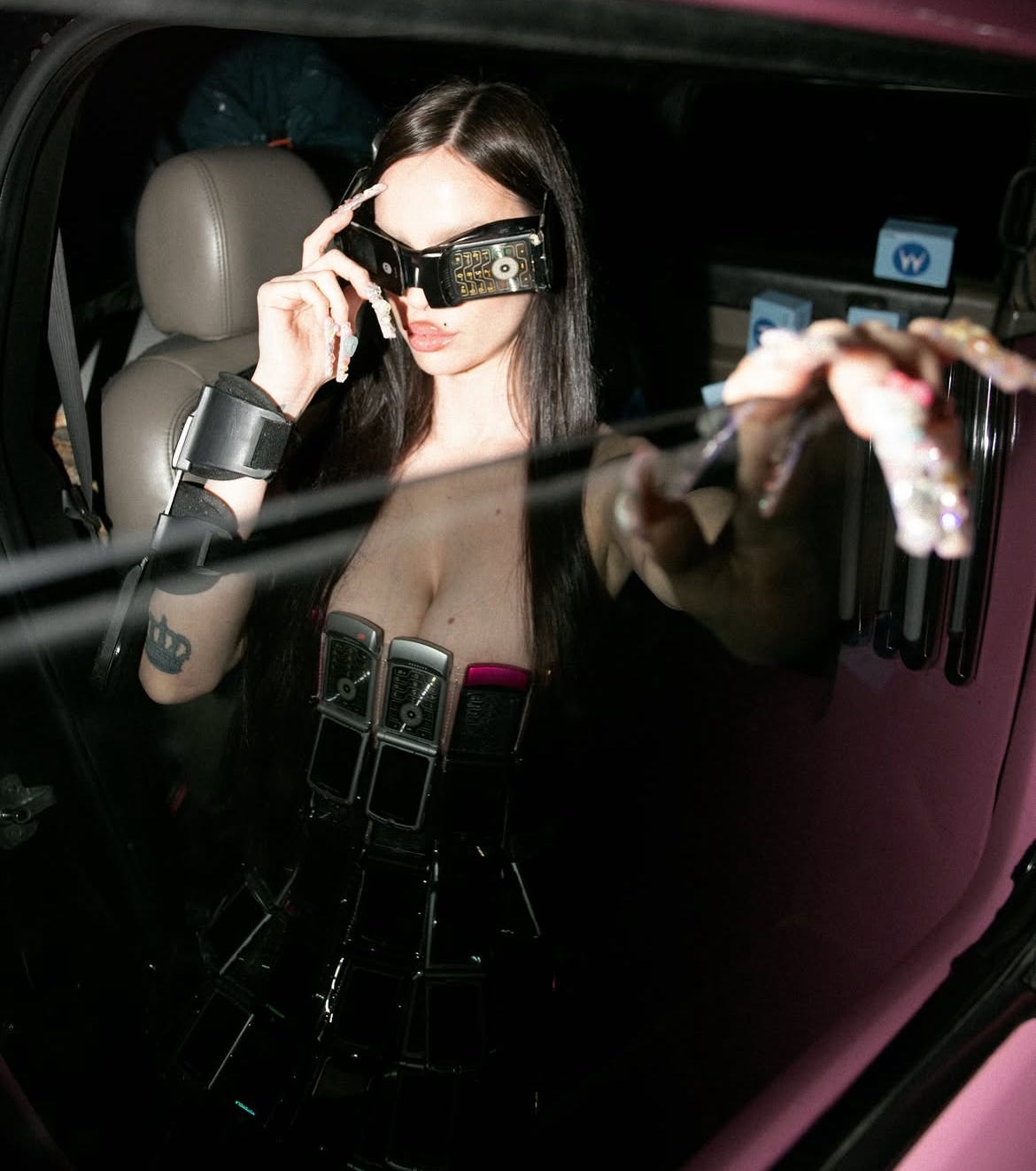
If you’re curious and would like to listen to Phantom please let me know in the comments and I will personally send you a private link. I would love to hear your thoughts.
We’re still looking for a label that might be interested in publishing the project, but if we can’t find one soon we might just publish the project ourselves. Meaning, you’ll be hearing about it very soooooon.
me encantaaaaa súper interesante! would luv to listen